

News
Contact UsNews
Contact UsHow to Install Vinyl Plank Flooring on Concrete
-
 author
- 18 June 2026

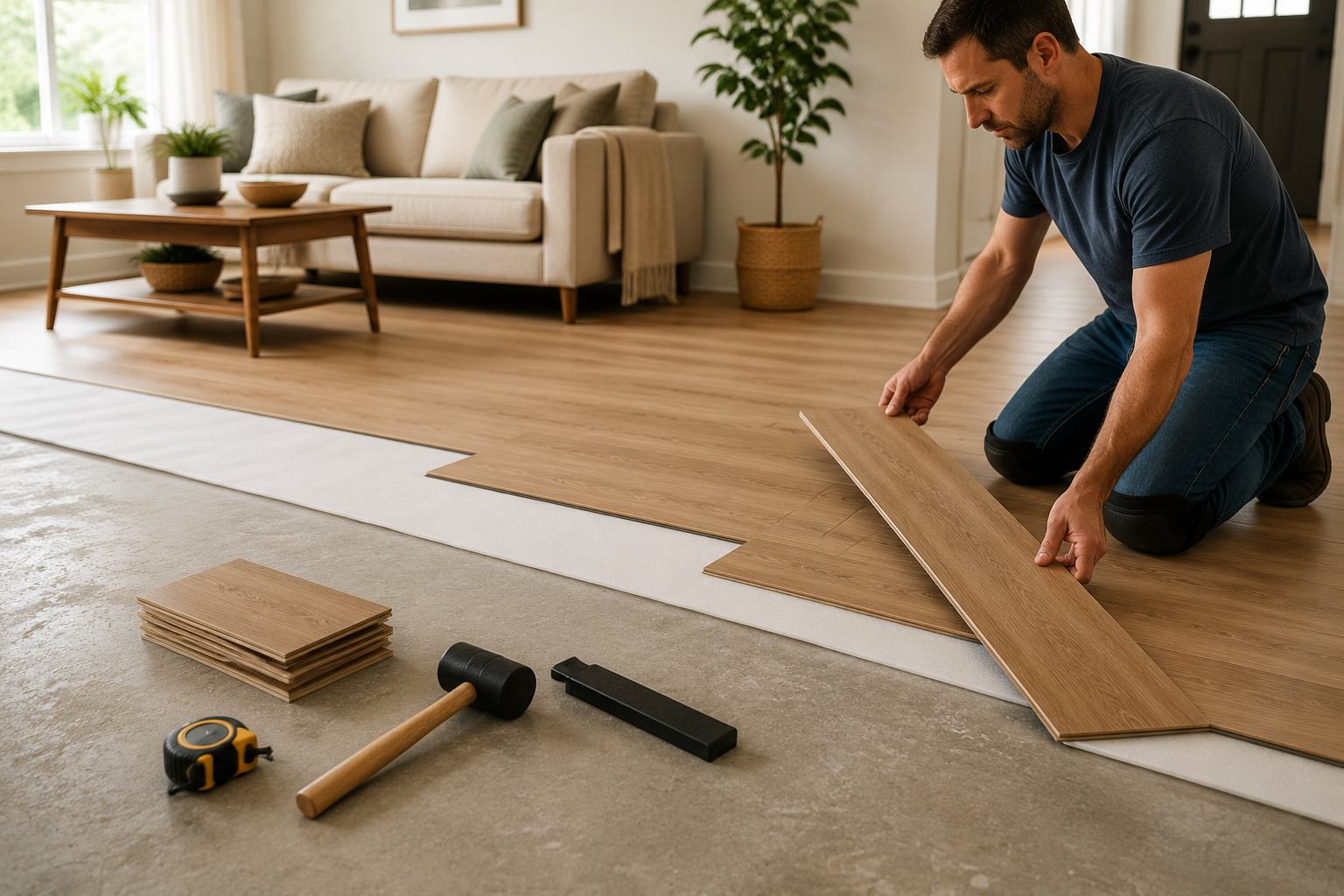
Luxury vinyl plank flooring has become one of the most sought-after options for modern interiors, offering a balance of aesthetics, resilience, and practicality. Whether used in homes or commercial spaces, its ability to mimic natural wood while resisting moisture and wear makes it ideal for installation over concrete subfloors. When properly installed, vinyl plank flooring provides a seamless, contemporary look that stands up to years of foot traffic. This article provides an in-depth exploration of how to install vinyl plank flooring on concrete, covering every technical step—from subfloor preparation and moisture testing to layout planning and long-term maintenance.
What Preparations Are Needed Before Installing Vinyl Plank Flooring on Concrete?
Before you start installing your vinyl plank flooring, the success of your project will depend on the condition of the concrete subfloor as it was before you started. Proper subfloor preparation can prevent many potential problems such as uneven joints, edges lifting and the potential for trapped moisture in the flooring.
Assessing the Condition of the Concrete Subfloor
First, inspect your concrete for cracks, holes and low areas. As stated in the industry standards for concrete coatings, flatness variations are limited to 3/16 inch of variation over a 10 foot area using a 6 foot straightedge. Any deviations greater than this must be filled using a self-leveling type compound or patching type of compound. Cracks must be filled using a hydraulic type cement or epoxy type repair compound. Make sure the cracks are filled and are level and hard before proceeding with the rest of the installation.
Moisture Testing and Barrier Installation
When installing vinyl over concrete one of the biggest problems is moisture. Performing a calcium chloride test or relative humidity (RH) test in accordance with ASTM F2170 is critical to establish if there are any adverse conditions present. If the RH readings are above 75% it is advised to install a vapor barrier or use a moisture mitigation system that has been approved by the manufacturer of the chosen flooring. A minimum 6-mil polyethylene sheet can act as an effective vapor barrier and would be suitable to apply beneath floating luxury vinyl planks to prevent damage from water vapor rising up from the slab.
Cleaning and Surface Preparation
Once you have resolved any structural problems and any moisture issues on the subfloor, it’s then time to give the subfloor a good clean. Remove any dust, oil marks, paint, adhesive etc. from the subfloor to ensure that the flooring can bond to the subfloor correctly. Vacuuming the subfloor with a vacuum cleaner fitted with a HEPA filter is a good way to pick up all the fine particles that can be left on a subfloor. Make sure the subfloor is completely dry before laying your vinyl flooring. Vinyl flooring needs a clean and dry base to perform at its best.
How Do You Choose the Right Type of Vinyl Plank Flooring for Concrete Subfloors?
Next, we will consider the possible materials for the flooring in a concrete room. This list will include the type of installation, the materials’ thickness, the wear layer’s class, and the core’s composition. All of these will help to measure the floor’s durability and comfort.
Comparing Click-Lock vs. Glue-Down Vinyl Planks
The click-lock system is one of the fastest installation systems on the floating market. As the name suggests, the system works best on smooth surfaces and uses the interlocking edges of the individual floorboards. Glue-down planks are best used in high-traffic areas or in spaces that are exposed to extreme temperature changes as they offer the greatest dimensional stability once the flooring has been glued to the subfloor. Floating floor systems are easy to exchange in the event of damage, making them a good choice for residential applications.
Evaluating Thickness, Wear Layer, and Core Material
Thicker planks between 5–8 mm deliver better sound absorption and comfort underfoot compared to thinner alternatives. For commercial settings subject to heavy wear, choose products with at least a 20-mil wear layer as outlined in ASTM F1700 standards. Rigid core SPC (Stone Plastic Composite) flooring performs exceptionally well on concrete due to its dense structure that resists indentation and thermal expansion.
Considering Aesthetic and Functional Factors
In addition to the performance criteria of flooring, the design has to meet the expectations for selection. The matte finish is better to hide dust than a glossy finish, in stores with high traffic this would be an ideal choice. The embossed finish gives a better simulation of real wood than a decal. Also waterproof vinyl flooring is ideal for use in basements and other rooms on the ground floor that are prone to damp such as condensation or leaks. This type of flooring will give you peace of mind knowing that your floor will withstand any damp conditions.
What Are the Key Steps in Installing Vinyl Plank Flooring on Concrete?

After preparation and material selection, the execution phase follows and determines the final result.
Step 1: Acclimating the Flooring Materials
Store unopened cartons in the installation area for a minimum of 48 hours at room ambient temperature between 65°F and 85°F. This allows cartons to acclimate to room humidity reducing post installation expansion/contraction.
Step 2: Planning Layout and Expansion Gaps
First measure the room for all the planks and then cut them, it’s a good idea to lay them out so that end cuts are all of minimum length of 6″ for best visual results, also make sure that there is room for wood to expand and contract due to temperature change by having an expansion gap of 1/4″ around all fixed items, such as walls and posts using timber spacers.
Step 3: Laying the First Row of Planks
Begin installing flooring along the longest wall of the room. Typically this will be the wall directly opposite the entrance to the room. Use a chalk line to establish the correct alignment, then continue to install boards, mitering tongue-and-groove joints at an angle. Use considerable pressure to engage joints until they click into place securely.
Step 4: Staggering Joints for Structural Integrity
End joints of adjacent panels should offset a minimum of 8 inches from each other. This allows stress to be distributed evenly across the seam. It also adds to the stability of the system. Random staggering as opposed to a regular pattern found in square rooms also adds to aesthetics avoiding repetitive rectangular sections.
Step 5: Finishing Touches—Trimming and Transition Moldings
Trim door jambs slightly so planks can slide underneath without gaps using an oscillating saw for precision cuts. Install transition strips where vinyl meets other materials such as tile or carpet; this ensures smooth transitions while protecting exposed edges from chipping or lifting.
How Can Common Installation Challenges Be Prevented?
Even the best-prepared installation will experience environmental stresses over time; the key is to take proactive steps to ensure that the installation continues to function well over the long term.
Managing Moisture Migration Over Time
Most basements experience some fluctuation in humidity due to the seasons. Use of dehumidifiers will keep indoor RH levels below the manufacturer’s specified limits. Check baseboards periodically for signs of moisture being trapped between the drywall and baseboards where they may be swelling.
Avoiding Peaking or Gapping Issues
Temperature consistency is key; avoid exposing floors to extreme heat sources like direct sunlight through large windows without blinds. Heavy furniture should never block expansion zones; use felt pads under legs instead of anchoring items directly onto planks.
Handling Uneven Subfloors During Installation
For shallow depressions less than ⅛ inch deep, apply self-leveling compound prior to installation for smoother results. Never install directly over cracked concrete without repair—it risks visible misalignment along seams once traffic pressure is applied.
How Does Proper Maintenance Extend the Life of Vinyl Flooring on Concrete?

Regular maintenance can extend the time period that your vinyl plank flooring retains its original look and functionality.
Routine Cleaning Practices
DAILY – Using soft-bristle brooms or hard floor vacuum attachments sweep daily to remove grit before it can cause micro-scratches. Use a pH-neutral cleaner specifically designed for cleaning vinyl floors. Do not use Ammonia based cleaners as they will slowly degrade protective coatings.
Preventive Measures Against Wear
Stickers of felt are attached to the legs of the furniture before the heavy loads are moved on the floor. In the places where the most dirt is accumulated, such as in the kitchen or corridor, it is sufficient to put a washable mat in the entrance, and already the enormous reduction of abrasion is visible.
Need Professional Vinyl Flooring Solutions?
Whether you’re sourcing vinyl flooring for residential renovations or commercial construction projects, choosing materials designed for concrete subfloors can greatly improve both installation efficiency and long-term performance.Based in one of China’s major industrial hubs, Sichuan Lumiwarm Decoration Materials Co., Ltd. specializes in a full range of premium vinyl flooring products, including LVT, rigid core SPC flooring, and WPC hybrid flooring, while also providing practical technical guidance tailored to real site conditions such as subfloor type and humidity levels. In addition to manufacturing, the company supports OEM/ODM customization, coordinates global logistics to more than 100 countries, and ensures consistent quality through strict ASTM-standard testing, helping clients achieve reliable results across diverse flooring applications.
Conclusion
As illustrated in this article, installing Luxury Vinyl Plank Flooring on concrete can be a very technical project that not only requires a high degree of skill but also knowledge of the proper material science to ensure a long-lasting installation. The key to any successful installation is following all of the proper steps from evaluating the slab flatness to ensuring that the flooring product is properly acclimated to the job site. Not to mention the proper testing for moisture using products such as the Delmation Moisture Trox from ASTM, F2170 to name. This type of Flooring has been able to last decades with very little upkeep when compared to other types of flooring such as Hardwoods. Global demand for resilient flooring continues to climb at a rapid pace with the Floor Covering Weekly reporting an 18%+ increase in demand over the past year alone due to the products ability to prevent moisture related failures in concrete-based interior spaces such as basement and retail locations. This type of performance has made the product very attractive to consumers around the world, and with a reliable supplier such as Sichuan Lumiwarm who can engineer a specific product to meet the demands of a particular installation, achieving cost effective results with architectural elegance has become more of a reality for contractors around the globe.
FAQs
1. Can vinyl plank flooring be installed directly on painted concrete?
Vinyl plank flooring should not be installed directly on painted concrete. If the existing paint on the concrete is hard and adhering well then it might be ok but under stress i.e. when walked on etc. it will fail. The concrete should first be mechanically abraded to create key and then a primer applied before installing the vinyl plank flooring.
2. Is underlayment required for Luxury Vinyl Plank installation over concrete?
Many of the rigid-core products have already a thick padding layer incorporated into the product. However, an acoustic underlayment can provide additional comfort underfoot as well as sound absorption, but this is most important in multi-story homes where noise transfer is at its worst.
3. How long should a new concrete slab cure before flooring installation?
A new concrete slab should be allowed to cure for approximately 60 days before testing and flooring installation can proceed.
4. Can radiant floor heating be used beneath vinyl plank floors?
The majority of LVP floor products can function safely on top of radiant heat as long as the surface temperature is kept below the maximum temperature recommended by the specific floor product. Typically this surface temperature would be around 80–85°F or 27–29°C. Always refer to documentation provided for the specific flooring product prior to beginning an installation.
5. What’s the typical lifespan of luxury vinyl plank flooring installed on concrete?
Stable indoor climate combined with regular cleaning in compliance with a schedule throughout the life cycle of a building, premium-class LVP is long-lasting. Fifteen–twenty-five years according to National Wood Flooring Association benchmarks reported industrywide.
6.If the plank is already attached to the underlayment, is it necessary to add a vapor barrier on the concrete?
Yes, a vapor barrier is still recommended over concrete unless the product specifically states it is not required.
7.Can you glue vinyl plank flooring directly to concrete?
Yes, vinyl plank flooring can be glued directly to concrete if the surface is properly prepared and the correct adhesive is used.

Our Products
Our Products


our testimonials
What They Say About Our

“Super patient throughout communication—efficient and professional. This collaboration was so hassle-free!”

“Both quality and service exceeded expectations. The details are on point—I’ll definitely recommend it to friends!”

“Delivered right on time, and the product matched every detail we discussed. Totally satisfied!”


