
News
Contact UsNews
Contact UsHow to Remove Vinyl Flooring Glue Without Damaging the Subfloor: Complete Guide
-
 author
- 10 July 2026

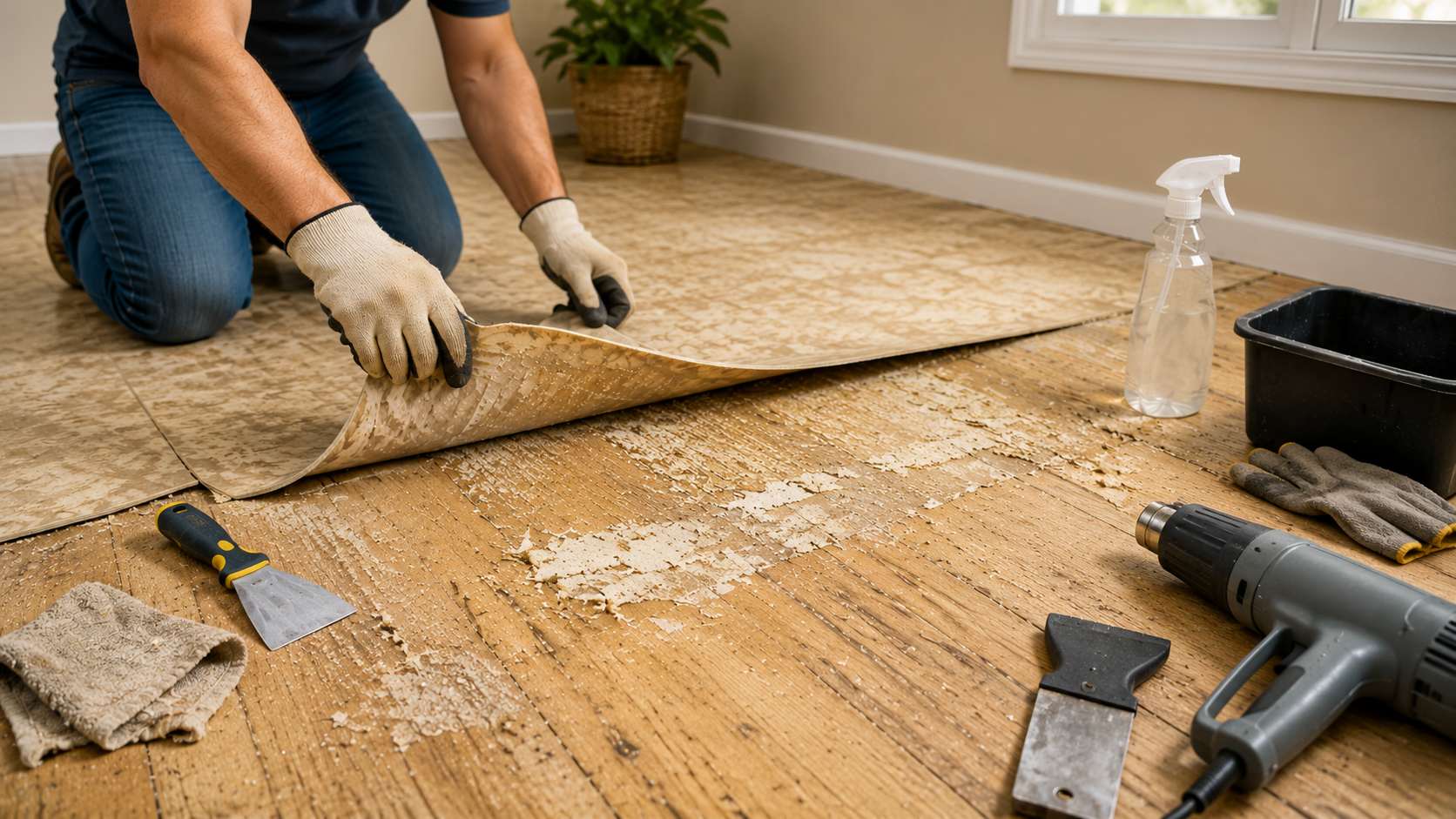
How to Remove Vinyl Flooring Adhesive is more than just cleaning up after old vinyl flooring removal. Homeowners, contractors, flooring distributors and project buyers can all suffer negative results of old adhesive removal that does not go well. Damaging the subfloor, adding days or even weeks to the installation of new flooring, increasing the cost of the installation of new flooring and in some cases affecting the performance of new vinyl flooring or sheet vinyl flooring are all of potential concern to all involved in a flooring project. The method for removing old flooring adhesive will depend upon the type of flooring adhesive that was used on the old flooring, the type of subfloor that it was adhered to, the age of the flooring, the amount of moisture that is present, and whether or not hazardous materials are involved. With these variables in play, it is very important to take a lot of care in the removal of old flooring adhesive and to plan out the work to protect both the surface and the people performing the work.
Quick Answer: How Do You Remove Vinyl Flooring Glue?
Start by checking what kind of subfloor and adhesive you are dealing with. In most cases, the glue can be softened with warm water or a suitable adhesive remover, then lifted with a floor scraper. Work in small sections and avoid using more force, water, or chemicals than necessary. Older flooring should be checked for possible asbestos before scraping or sanding begins.
What should you check before removing vinyl flooring glue?
Begin to remove the glue in an inspection fashion, instead of with force. The old floor can have many conditions and thus the work to remove the old adhesive can range from DIY work to full remediation work by a professional.
How old is the existing vinyl floor?
Vinyl flooring, backing, and adhesives of older ages may contain asbestos. The U.S. EPA states that you cannot usually tell by looking at a material whether it contains asbestos or not. Treat suspected materials as if they contained asbestos until they have been confirmed not to contain asbestos. Release of asbestos fibers from asbestos-containing materials can occur when materials are disturbed; removed improperly; sanded; cut; drilled or scraped.
Stopp if you are confronted with old, unknown or even damaged floorcoverings. Testing or a professional investigation might be needed before you start the removal.
What type of subfloor is under the glue?
When dealing with a subfloor of concrete, plywood, OSB, or old underlayment, they can all be addressed but in very different ways. Concrete can generally handle more moisture and scraping than can a wood-based subfloor, which can swell, gouge, or even delaminate if too wet and subjected to too much scraping.
The surface for new sheet vinyl flooring has to be flat, clean, dry and stable. Aggressive removal of old glue from a weak subfloor could create more problems than it solves.
Types of Vinyl Flooring Adhesive
Prior to removing the vinyl flooring adhesive it is advisable to establish the type of adhesive used. Different types of adhesive need to be removed using different methods and some types are worse than others at damaging the subfloor.
Pressure-Sensitive Adhesive (PSA)
A popular adhesive used for many types of vinyl tiles, including luxury vinyl flooring. This adhesive is flexible and can be “softened” with an adhesive remover prior to scraping.
Water-Based Acrylic Adhesive
A modern vinyl floor adhesive, this is easy enough to remove and tends to leave just residue that will require a good clean.
Cutback Adhesive
Cutback adhesives can often be found in older installations of vinyl flooring. They contain a number of different ingredients and some older types may contain asbestos. Before removal it is wise to test the adhesive.
Polymer-Based Adhesive
The majority of modern high-performance adhesives have been developed to provide high levels of bond and resistance to moisture. Removal of some high-performance adhesives may require specialist techniques.
Knowing the type of adhesive that has been used helps when selecting removal tools and preventing damage to the subfloor.
Which tools and materials are useful for glue removal?
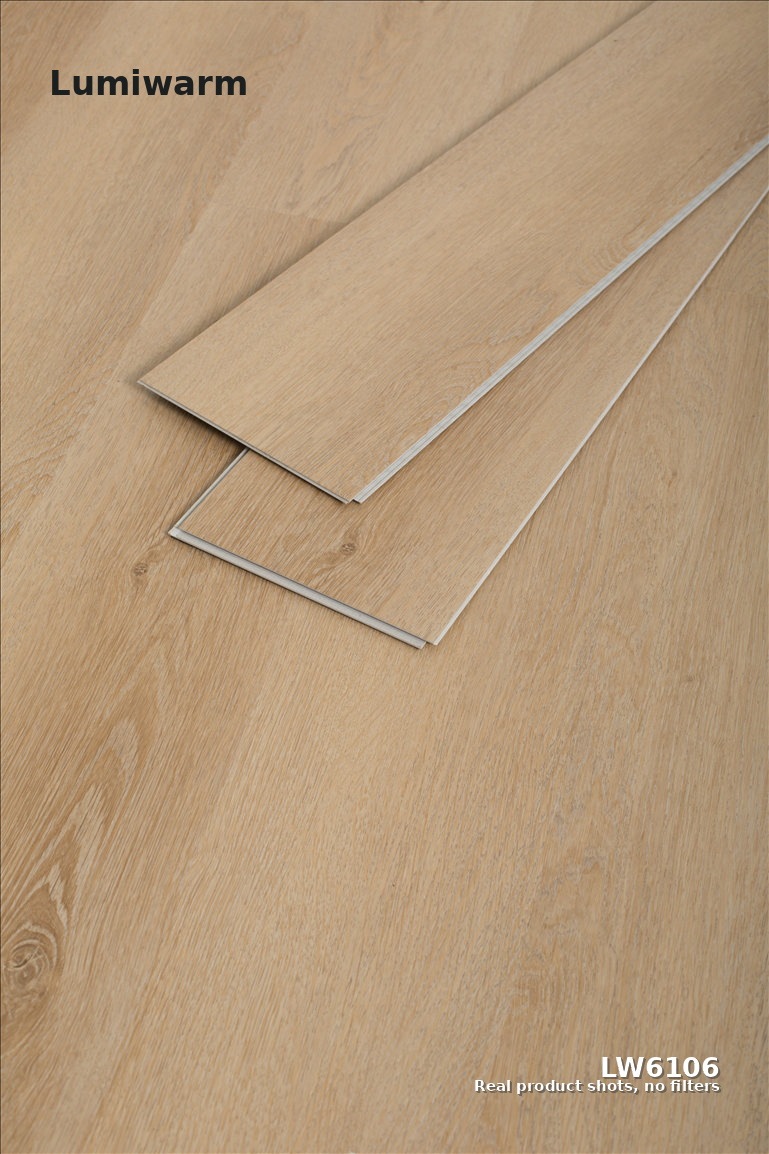
The least aggressive method to prepare the floor to install new flooring is usually the safest. The tools to use would depend on the type of adhesive being used as well as the subfloor.
What basic tools should be prepared?
Typical methods for removing adhesives from floors involve using a floor scraper or a stiff putty knife, followed by the use of a utility knife as necessary. A mixture of warm water and adhesive remover in a spray bottle is very effective for loosening and removing most adhesives. The removed adhesive can be wiped from the floor with towels. Make sure the adhesive remover you select is approved for use on your type of floor substrate. Gloves, eye protection and proper ventilation are also very important when using adhesive remover. A long-handled scraper can also be very effective for removing large amounts of adhesive over a big area to prevent excessive fatigue.
Don’t start with grinders and sanders as per OSHA. Flooring or backing associated with asbestos-containing material should NOT be sanded. Residual adhesive scraping can be done wet in relevant asbestos flooring applications.
When should chemical adhesive remover be used?
You can use an adhesive remover to ‘soften’ the adhesive when using water and scraping doesn’t work. Read the label of any product you choose to buy, check for any special ventilation requirements, test a small area first and make sure it is compatible with the sub floor as well as future flooring adhesives.
Some removal agents can leave residue. The residue left can interfere with adhesion, leveling compounds and floating floor stability.
How do you remove vinyl flooring glue step by step?
A controlled process means minimum damage to the surface. Our objective is not to ‘restored’ the subfloor to ‘new’ condition but to make it suitable for the next install.
Glue removal is easier to control when the work is broken into small stages. The aim is not to scrape the subfloor until it looks new. What matters is leaving a surface that is clean, dry, stable and ready for the next floor.
Step 1: Inspect the Existing Flooring and Subfloor
Step 2: Identify the Adhesive Type
Step 3: Choose the Right Removal Method
Step 4: Soften the Adhesive
Step 5: Scrape the Adhesive Carefully
Step 6: Remove Remaining Residue
Step 7: Clean and Dry the Subfloor
Step 8: Inspect and Repair the Subfloor
Step 9: Prepare for New Flooring
How should the old adhesive be softened?
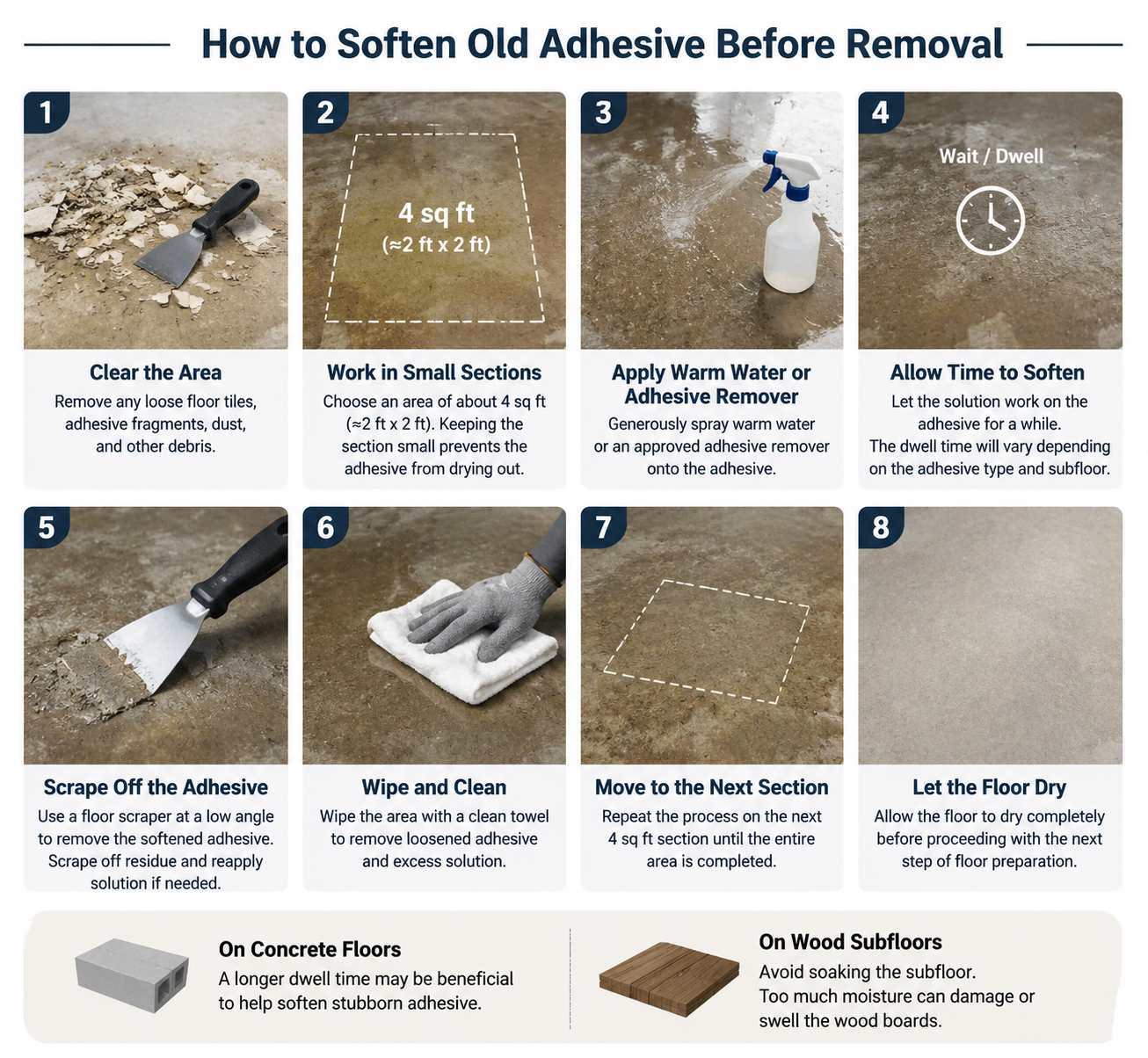
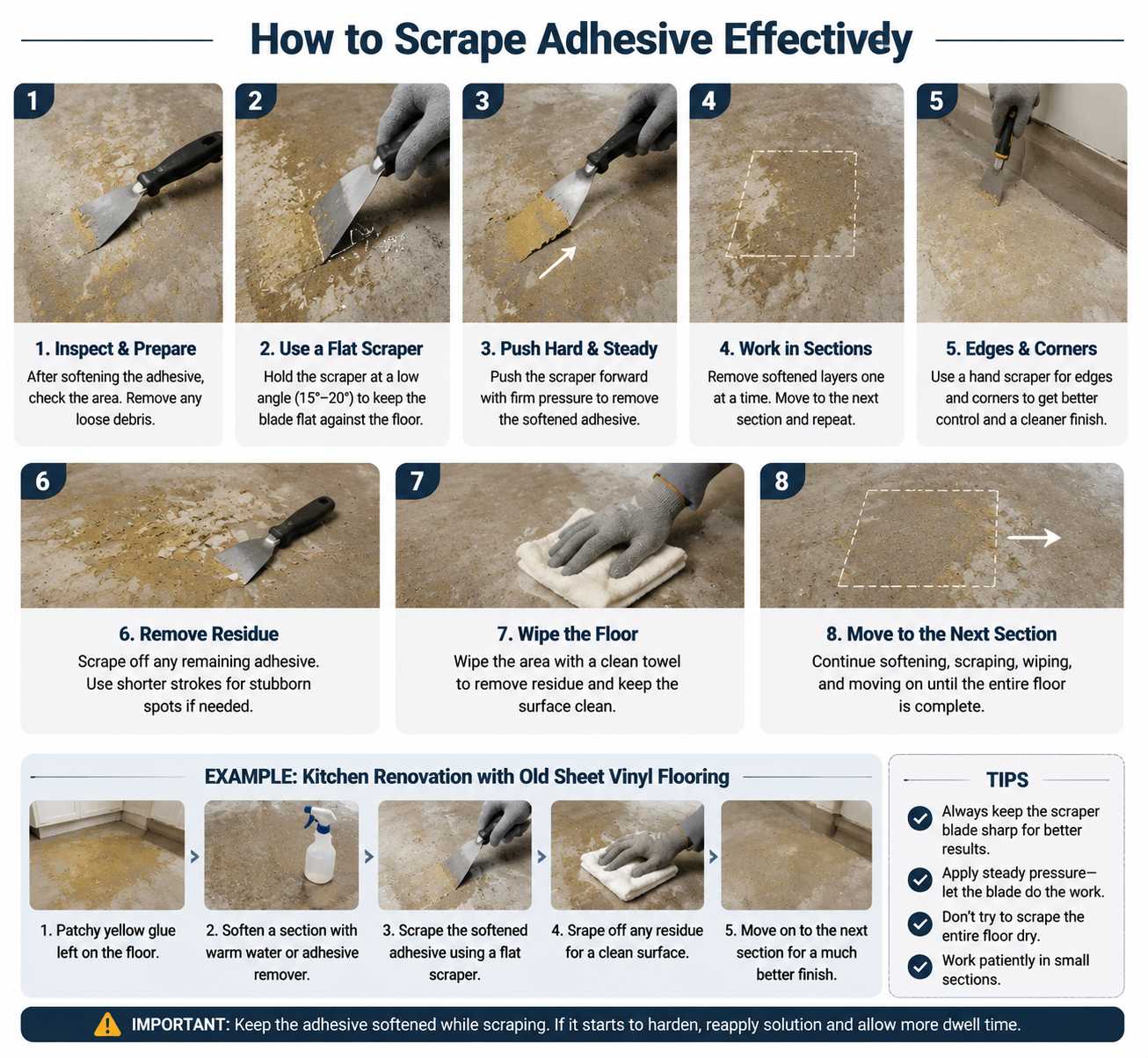
Clear away any loose floor tiles or other debris, then apply warm water or an approved adhesive remover to a section of about 4 sq ft. Allow it to work on the adhesive for a while before scraping it off with a scraper. It is very important to keep the work area small so that the glue does not harden before you have a chance to scrape it off.
A longer dwell time on concrete floors may be beneficial; On wood sub floors however, avoid soaking as it can damage the board.
How should scraping be done?
Using a flat scraper at a low angle and pushing hard should remove most of the adhesive. It’s a good idea to work in sections removing the softened layers of adhesive one at a time. Edges and corners are best removed with a hand scraper for more control.
Here is an example of a practical application for this concept. An old sheet vinyl floor in a kitchen renovation has patchy yellow glue left on the floor. Instead of trying to scrape the entire floor to dry, softening one section, scraping, wiping off any residue, and then moving on to the next section will result in a much better finish.
How can you avoid damaging the subfloor?
Hidden costs of glue removal – Subfloor damage. Subfloor damage often is not visible until the newly installed flooring starts to develop bumps, blisters, or even starts to delaminate due to failure of the flooring to bond to the subfloor.
What mistakes cause surface damage?
Mistakes when removing old flooring include using to much water on plywood, grinding off the old adhesives before checking for asbestos, scraping at to steep of an angle, using strong chemicals without first testing, and leaving sticky residue for the new flooring to be put over.
Another crucial factor to be mindful of is the time required for flooring to dry prior to installation of new flooring. Should this be rushed, the risk of moisture being trapped exists. This in turn can affect the performance of the adhesive, potentially causing problems with the newly installed vinyl flooring.
How should the surface be cleaned after removal?
After you scrape off what you can from the adhesive, use clean water or the neutralizer recommended by the remover to wipe the subfloor down to dry. Allow the subfloor to dry completely before proceeding to inspect for ridges, soft spots, stains, loose particles, and remaining film of adhesive.
Floor patch or leveling compound may be required before new flooring is installed. Ensure that chosen product is compatible with future flooring. Never install new flooring on top of unstable glue residue.
Not every removal method is equally safe for every subfloor. The table below gives a quick comparison of common methods and the level of risk involved.
| Removal Method | Concrete | Wood Subfloor | Risk |
| Hand scraping | Suitable | Suitable with care | Low |
| Warm water | Often suitable | Limited | Low-Medium |
| Adhesive remover | Product dependent | Test first | Medium |
| Heat | Adhesive dependent | Use carefully | Medium |
| Grinding | Possible in suitable situations | Risky | High |
| Sanding | Depends on asbestos status | Risky | High |
When should you call a professional?

There are some glue removal jobs that are just not worth the risk. Others can be done with professional help to minimize the risks to safety, schedule and quality.
Which situations need expert review?
Whether you suspect the floor may contain asbestos, you are using black cutback mastic adhesive, you have a large area, the subfloor is severely damaged, or it’s a school, hotel, office, health care facility or even a rental property – for commercial jobs, it’s best to have a professional do the removal. Typically for commercial projects you will also need documentation of how the asbestos was removed, disposal of all asbestos containing waste, and the asbestos removal workers will need to follow strict safety protocols during the removal.
Asbestos removal should be performed by trained and accredited asbestos professionals in order to prevent increased exposure during improper removal.
What should buyers ask before hiring?
For residential projects ask about inspection methods, dust control, disposal, insurance, schedule, and surface preparation standards. Ask who will do subfloor repairs. For B2B projects ask for photos, written scope of work, product compatibility notes, and final surface acceptance criteria.
Before you have new vinyl flooring installed it is important that your contractor explains what he will remove and what he may leave behind. Also he must state what surface condition he requires to complete the job properly.
Who can support flooring buyers after glue removal?
After the old adhesive is removed, the next flooring choice should be based on the condition of the subfloor and how the new floor will be installed. Moisture levels and product specifications also need to be checked before an order is confirmed. Lumiwarm works with flooring manufacturing partners in China and helps overseas buyers source vinyl, LVT, SPC, WPC and laminate flooring. Depending on the project, the work may include comparing products, checking technical details, following quality requirements and arranging export delivery.
Conclusion
Removing vinyl flooring adhesive from a floor surface requires time, inspection of the surfaces to be prepared, and a number of methods to remove different types of adhesives from various types of subfloor. Many old flooring products contain asbestos fibers. These products must be removed with extreme caution as the method of removal is critical to preventing the release of fibers from the material. In general, using warm water, approved flooring adhesive removers, and scrapping the material with controlled effort is the best approach to remove flooring adhesive as it is generally less aggressive than grinding the adhesive into the subfloor. The end result of properly removing old flooring adhesive is a clean, dry, flat, and stable surface on which to install new flooring, such as vinyl flooring or sheet vinyl flooring. This is essential to ensure that the new floor will perform well after it has been installed.
FAQs
1. Can I sand vinyl flooring glue off the floor?
Sanding of old glue is strongly discouraged unless the risk of asbestos has been ruled out and approved methods for removal of the old glue are being used. The dust from sanding of many old adhesives can create health problems and can also damage the subfloor.
2. What is the easiest way to remove vinyl flooring glue?
For many of the modern adhesives used today, softening a small area with warm water or an approved adhesive remover and then scraping gently can be a very effective way to start removing the adhesive.
3. Can I install new vinyl flooring over old glue?
Sticky, loose or uneven remaining adhesive has to be removed first before you can start laying out new flooring if remaining adhesive is stable, smooth, dry and suitable for the new flooring system.
4. How do I remove glue from wood subfloors?
Use minimal moisture. Test adhesive remover first. Scrape carefully to avoid gouging. Wood subfloors can swell or delaminate if too much moisture is applied.
5. When is professional removal necessary?
You will need to seek professional help if you believe there may be Asbestos present, the area is very large, you find Black Mastic or are unsure of the Subfloor condition.
6. Can vinyl flooring glue be removed without chemicals?
Yes. There are a number of ways to remove vinyl flooring glue without the use of chemicals. Most adhesives can be removed by scraper, heat gun, steam or even warm water, depending on the type of adhesive used. However, it is never recommended to sand old adhesive for fear that it may contain asbestos.
7. How long does vinyl adhesive removal take?
Vinyl Adhesive removal times can vary from a few hours to a couple of days depending on the size of the room, how thick the old adhesive is and what the state of the subfloor is.
8. Can I install SPC flooring after removing old vinyl glue?
Yes. Provided the subfloor is clean, dry, even and not containing any loose or sticky adhesive then installation of SPC flooring can proceed.
9. Do I need to remove all old adhesive before installing vinyl flooring?
No. Remove any loose, thick, sticky or unevenly spread adhesive. Thin, evenly spread, non-tacky residue may be left on some floating floor types.

Our Products
Our Products

our testimonials
What They Say About Our

“Super patient throughout communication—efficient and professional. This collaboration was so hassle-free!”

“Both quality and service exceeded expectations. The details are on point—I’ll definitely recommend it to friends!”

“Delivered right on time, and the product matched every detail we discussed. Totally satisfied!”


