Actualités
Nous contacterActualités
Nous contacterWPC Flooring Procurement: Benefits, Limits and Checks
-
 auteur
- 19 novembre 2026

A WPC sample may feel right underfoot and still be the wrong fit for a particular project. Before approving it, compare its build with the room’s traffic, moisture exposure, temperature and substrate. Then confirm that the test reports and installation instructions cover that same configuration. This guide shows what to check, what product claims leave unresolved and what to carry into the purchase order.
Where WPC comfort creates project value
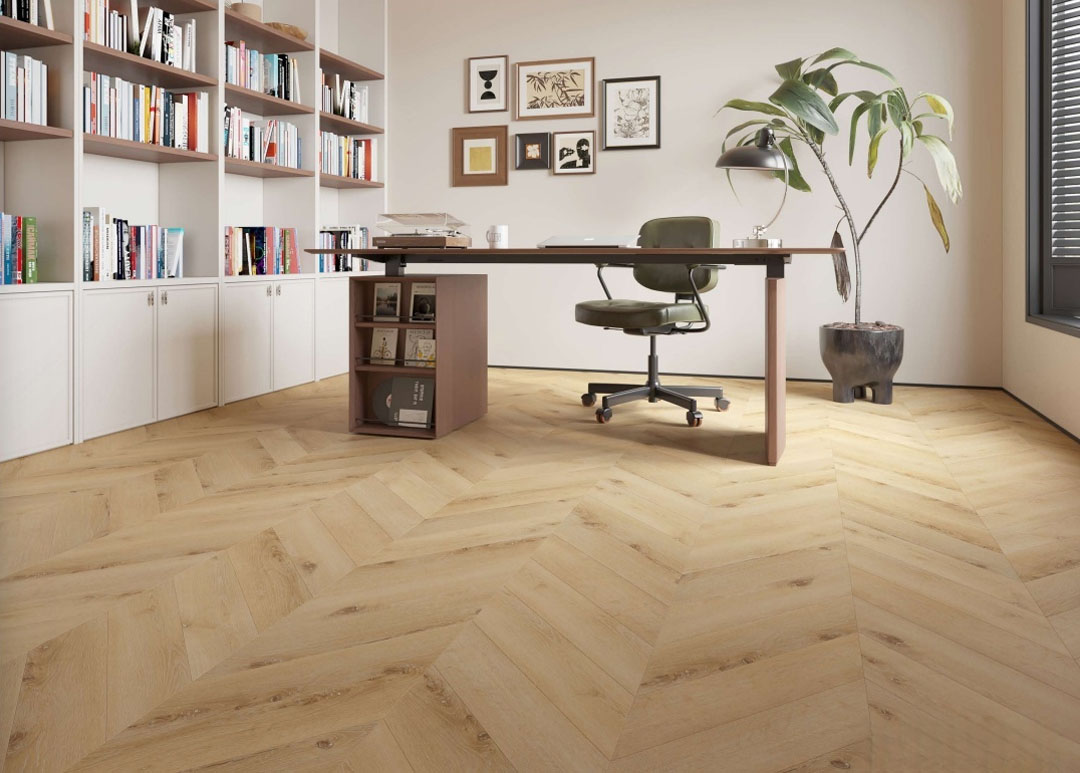
Comfort is one reason buyers consider WPC flooring, but the label alone cannot tell you how a board will feel. The finished assembly matters: surface, core and backing all play a part. A sample helps compare underfoot feel in areas where people stand for long periods or may walk barefoot.
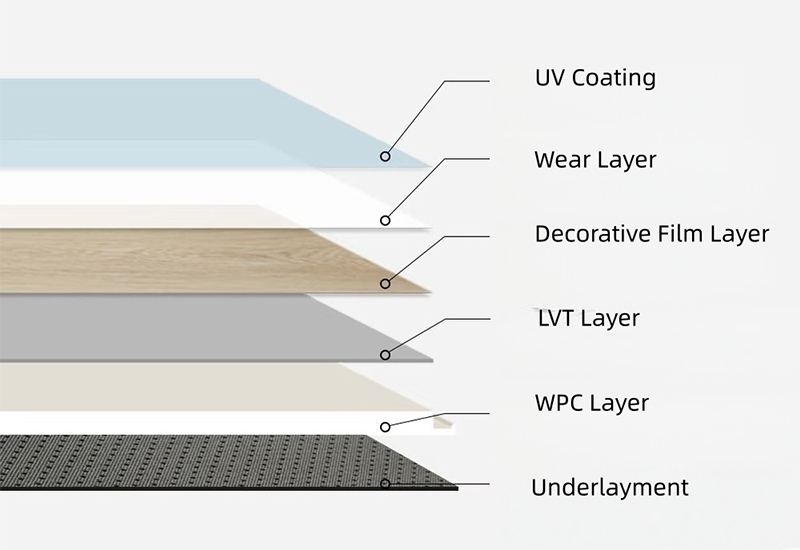
Lumiwarm’s WPC range includes AB and ABA structures. When comparing a wpc flooring manufacturer proposal, ask for a cross-section of the quoted SKU. Have the supplier identify every layer, including whether backing is attached. That gives your team a build to compare, rather than a category name.
Do not treat a soft underfoot feel as proof of sound control. If room-to-room noise matters, the test report should cover the board, backing and floor-ceiling assembly that the project will use. A result for a different build may not answer that question.
How the quoted construction changes the comparison
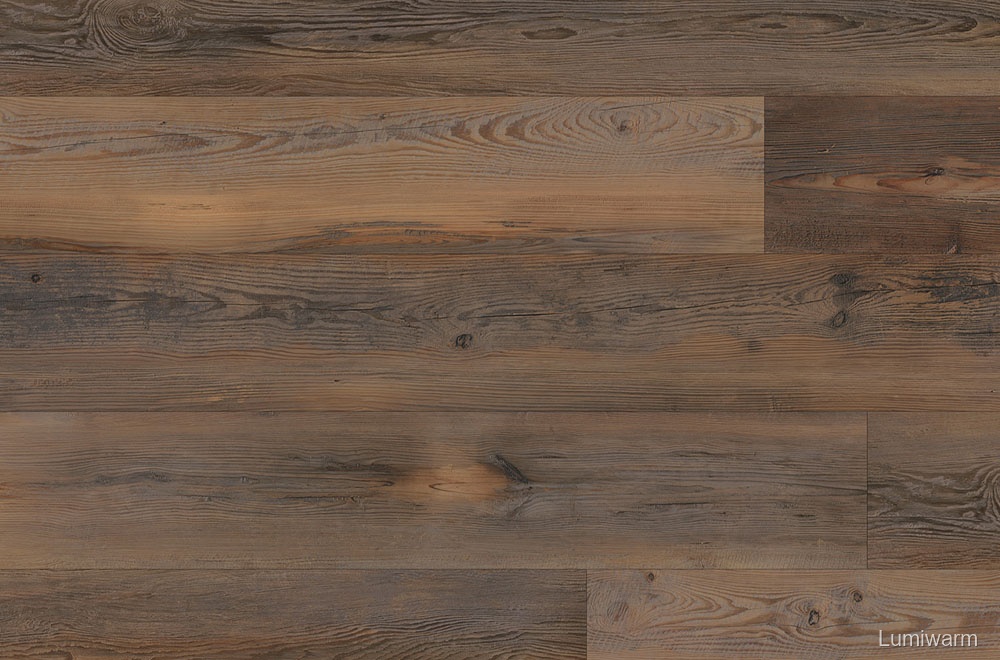
The published options for LW1290 wpc flooring show why the model number is only a starting point: multiple configurations are available. Name the thickness, wear layer and backing in the quotation, then ask whether the stated total thickness includes the backing. That makes competing proposals easier to compare.
| LW1290 specification | Published options | Procurement implication |
|---|---|---|
| Épaisseur totale | 8–12 mm | Confirm the chosen build and finished floor height. |
| Couche d’usure | 0.3, 0.5 or 0.7 mm | Select the surface specification separately from total thickness. |
| Underlayment material | IXPE, EVA, XPS or cork | Identify the backing supplied with the approved sample. |
| Underlayment thickness | 1.2, 1.5 or 2 mm | Confirm inclusion in the quoted assembly. |
These dimensions describe different parts of the product. Overall thickness can affect threshold and transition planning; the wear-layer figure addresses the surface specification. Neither number on its own establishes resistance to indentation or rolling loads. In rooms with carts or equipment, check the evidence for those loads.
Tie the backing choice to the rest of the floor build. Before adding underlayment, confirm that the selected assembly permits another layer and check the finished height at adjacent materials. An extra layer can change support beneath the joints and leave a mismatch at a transition.
Where the limits require closer attention
A moisture-resistant plank is not a room waterproofing plan. At doorways, drains and pipe penetrations, water can reach the substrate around joints or edges. Specify membrane and perimeter details separately from the flooring product.
The loading in a guest room differs from the demands of an office with chair casters or a service corridor used by loaded carts. If the same WPC is proposed across all three spaces, ask for evidence relevant to each use. Indentation and rolling-load reports are useful where equipment moves repeatedly.
Sun exposure and radiant heating bring their own limits. Request the temperature range, heating instructions and warranty exclusions for the exact model and build. A general statement about underfloor-heating compatibility does not tell you which operating limits apply.
Some WPC products are designed as decking, but the LW1290 page describes interior residential and commercial use. Keep it out of a terrace specification unless the supplier approves the exact product and installation details for weather, drainage and temperature conditions in writing.
Which documents make the specification verifiable
Ask the supplier to spell out the selected build: core composition, surface layers and backing. “WPC” is a category shorthand, not a complete material specification; similar labels can cover different assemblies. Keep the cross-section tied to the SKU in the submittal.
For WPC flooring specifications, match each report to the same SKU and build. Verify the model, thickness and backing on the document, then check the method and classification against project and destination requirements. Request applicable fire, slip and emissions documentation; do not carry results over to untested options.
Installation notes should answer practical questions before the boards arrive: substrate flatness and moisture, expansion space, fixed fittings and any extra underlayment. Click-lock joints connect the planks; they do not make an unsuitable substrate acceptable.
Read warranty exclusions against the actual rooms in the schedule. Check the terms for water damage, sunlight, rolling traffic and installation conditions. If an exclusion covers a planned use, get it clarified in writing before accepting the offer.
How to carry approval into bulk delivery
Keep a labeled sample for each approved configuration. Record the SKU, colour, thickness, wear layer and backing. If the site allows it, trial a doorway or transition; this exposes finished-height and joint-fit issues before bulk installation.
Lorsqu’ils comparent vinyl flooring wholesale suppliers, carry the approved build into the quote, purchase order and packing labels. Record tolerances and require notice before a product change. On receipt, compare boards with the retained sample and check dimensions, backing and locking edges before installation.
Approve the assembly for its intended room
Weigh WPC flooring benefits against WPC flooring limitations before approving an assembly for each room. Tie the build to matching reports, installation details and warranty, then check that the same configuration arrives with the order.
For projects assessing WPC, Lumiwarm can coordinate product selection, quality checks and export logistics with its qualified flooring manufacturing partners in China. Share the intended room uses and required documents to discuss a suitable configuration.
FAQ
Can WPC be installed beneath fixed cabinetry?
A floating floor may need expansion clearance around fixed units. Check the product’s installation drawing before sequencing the cabinets, flooring and trim.
Does a thicker wear layer prevent furniture dents?
Not by itself. Wear-layer thickness describes the surface; indentation depends on the complete product and the load. Ask for relevant test data and specify suitable furniture protection.
Should replacement boards be ordered with the main batch?
Set an allowance with the owner using the cut plan, layout and maintenance needs. Keep replacement material from the same colour and build where possible; there is no universal spare percentage.
Can damaged click-lock boards be replaced individually?
That depends on the locking profile and installed layout. Ask the supplier for the approved repair method before promising that a single plank can be changed without disturbing the surrounding floor.
What should happen if the delivered backing differs?
Hold the affected boxes and compare them with the purchase specification. Ask how the change affects thickness and installation, and obtain revised performance and warranty information before releasing the material.

Nos produits
Nos produits




nos témoignages
Ce qu’ils disent de notre

« Très patient tout au long des échanges, efficace et professionnel. Cette collaboration s’est déroulée sans le moindre souci ! »

« La qualité et le service ont dépassé nos attentes. Les détails sont impeccables, je le recommanderai sans hésiter à mes amis ! »

« Livré exactement à temps, et le produit correspondait à tous les détails dont nous avions discuté. Entièrement satisfait ! »